
I have always hated homework. The idea of sitting inside pouring over a textbook never interested me. But imagine a homework assignment where you’re asked to sit and observe nature for 30 minutes. Sounds like a dream assignment!
Q: What did the dog say to his classmate?
A: “Can I copy your homework, I ate mine.”
Tropical Ecology
I am taking a tropical ecology class at a local college. As part of our studies, we spend ten days in Costa Rican rainforests. We visit a regenerative farm and volunteer helping scientists measure trees. I am delighted to return to Costa Rica after 30 years. And this time I will be better educated about the tropical biome.
Before we leave for the jungle, our professor wants us to practice the skills we’ll use on our trip. Specifically, she wants us to work on our observation and journaling skills. To this end, she assigned us two “observational studies.” We must slip into a natural area to observe and record the plants and animals we see.
The Sit Spot
As an animal tracker, I call this a “sit spot.” It is an exercise common among animal trackers of all experience levels. I have written before about the importance of keeping a nature journal. I have also explained how I keep a small journal in my tracker’s pack so I can record new knowledge I gain in the field. It just so happens that my destination today is a sit spot where I wrote the tracker’s pack article – Sunol Regional Wilderness.
Setting Out
I am mystified how often I see rare and exciting things in nature close to where people congregate. I have hiked miles into the mountains only to stumble upon a bobcat hunting within sight of the trailhead parking lot.
A poignant example occurred when I was visiting a high-altitude rainforest in Australia. I hiked 12 miles (18 kilometers) on my own through the dense forest. Maybe that wasn’t a particularly smart thing to do. But I was rewarded with an astounding experience. I was completing my loop, just a kilometer from my destination, when I spied an Albert’s lyrebird (Menura alberti). This is a large brown bird with a wavy tail feathers like a peacock. It forages for food in leaf litter on the forest floor. It is known for its powerful song and its ability to mimic other sounds. I have seen videos of the birds imitating cameras, car alarms, and chainsaws. After 12 miles of hiking, I found it was hanging around my lodging.
Procoyon Lotor
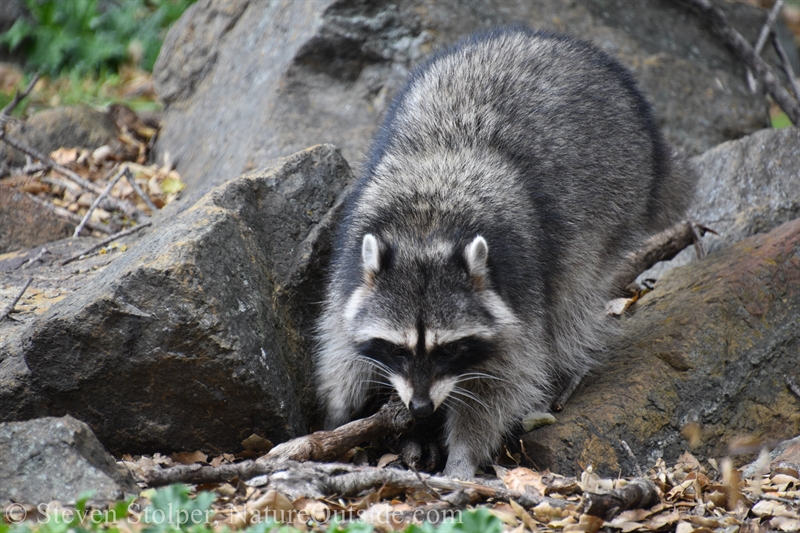
So I wasn’t surprised to find a Raccoon (Procyon lotor) foraging near the trailhead. It is scouring the leaf litter among rocks and fallen branches at the base of an enormous Coast Live Oak.
Notebook in hand, I stalk to within 25 feet of the distracted animal. And when it finally sees me, I pretended to look in another direction. It returns to its foraging. Obviously, this animal is habituated to people!
I notice that the Raccoon uses smell to guide it to an area. Then it rummages underneath the leaf litter with its front paws. It is hunting by feel! And when it grasps something, I assume an insect or earthworm, it pops it in its mouth so quickly that I can’t tell what it is. The Raccoon never uses its eyes during the whole operation. I enter notations in my journal as I prepare to move on.
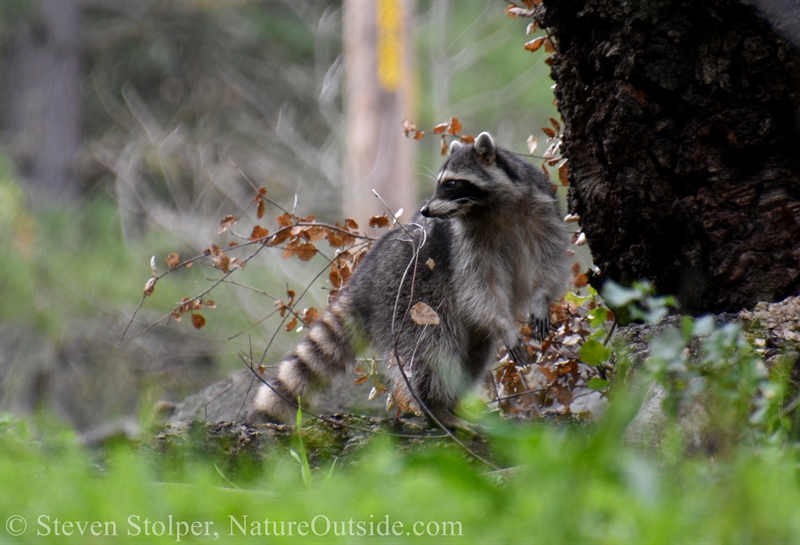
I see the Raccoon in the distance and decide to find out what it is doing.
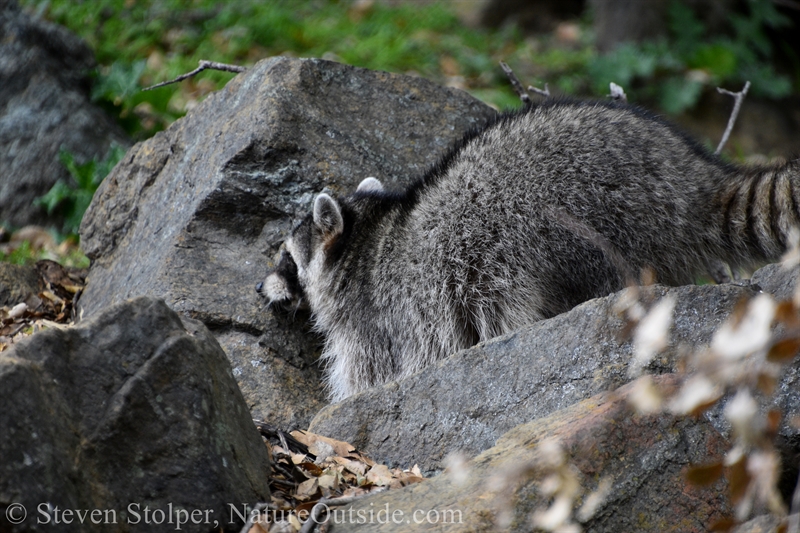
The Raccoon uses its sense of touch to find its prey.
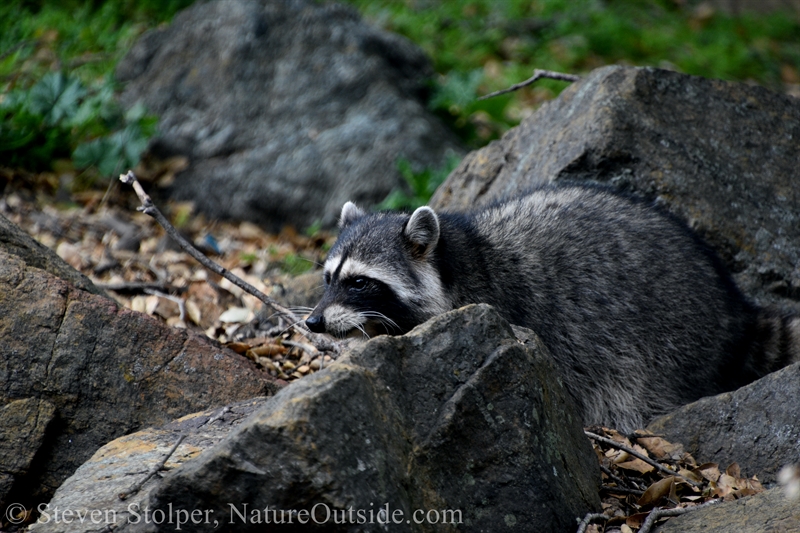
The Raccoon feels around under a rock.
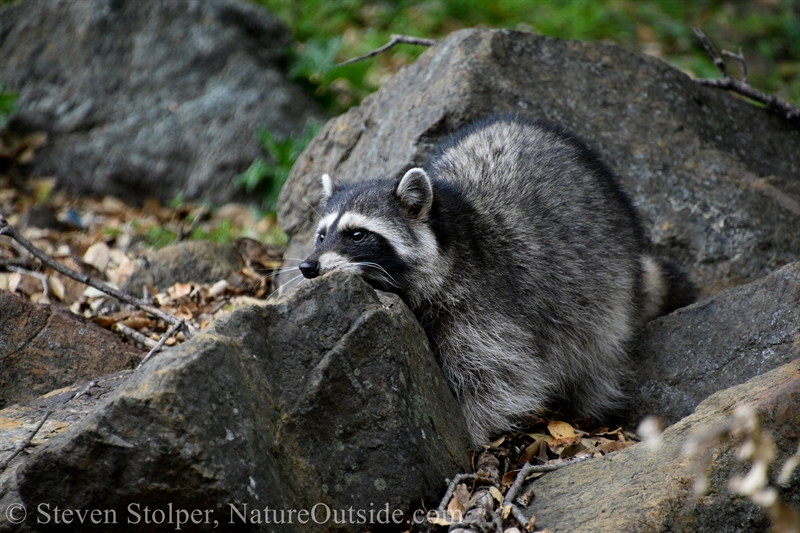
The Raccoon hunts without using its eyesight.
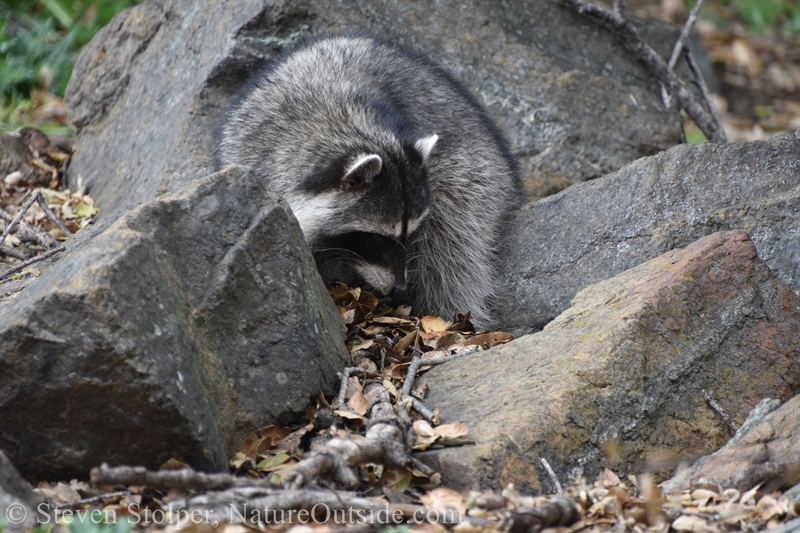
Smell guides it to a general area to search.
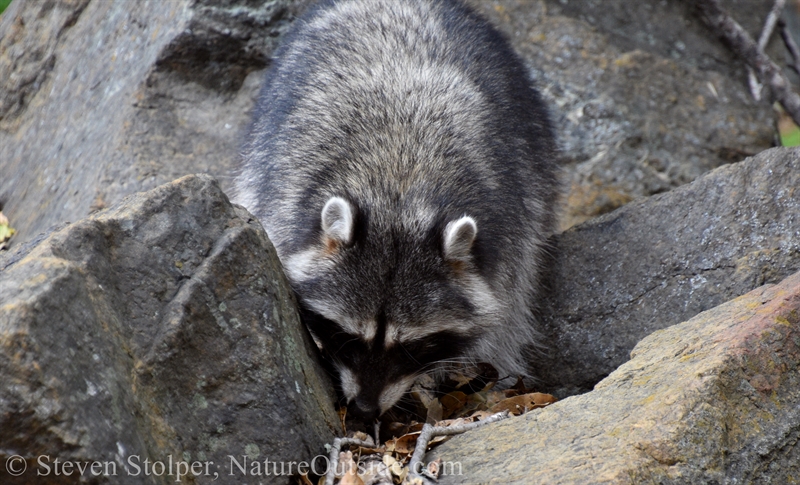
The Raccoon using its sense of smell to decide where to dig.
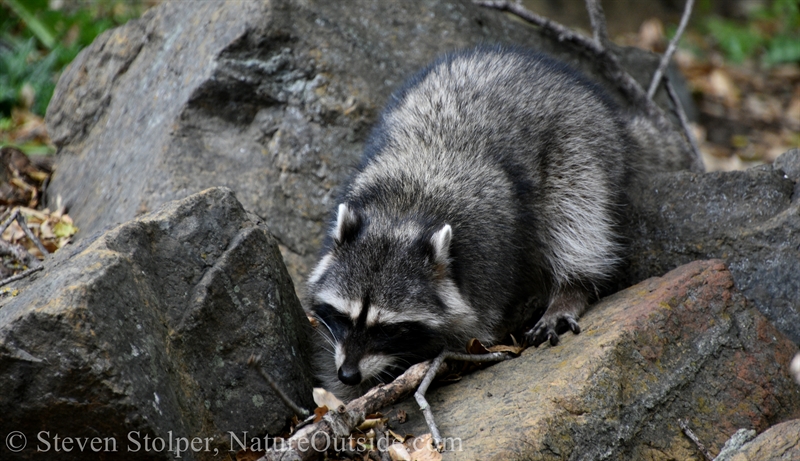
Feeling for food under leaf litter.
Love is in the Air
I am about to continue to my sit spot when I see this magnificent sight.
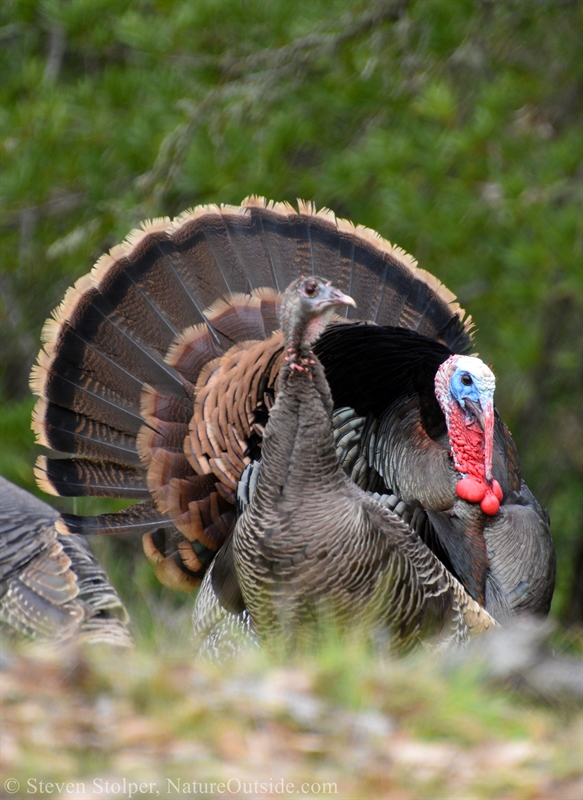
A male Turkey on display.
It is a flock of Wild turkey (Meleagris gallopavo). There are about 30 in all, but only one male. The male is pursuing the nearest female at a slow walking pace, eager to show off. The females issue short contact calls as they forage, ignoring the displaying Tom. They quickly detect my presence and begin to stroll away. I do not want to disturb them, so I resume the hike to my sit spot.
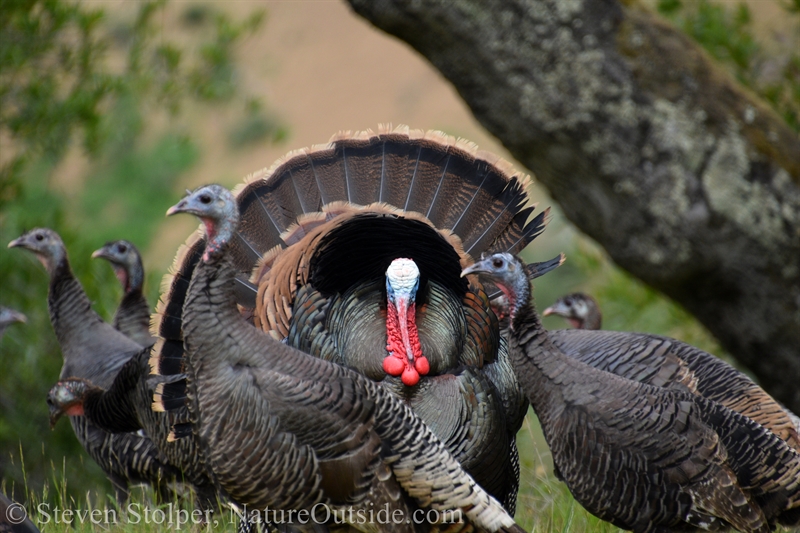
Tom pursuing females.
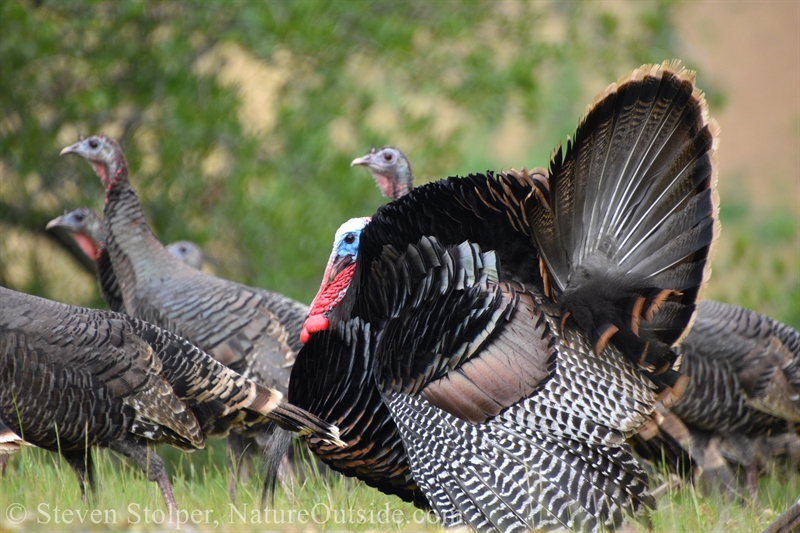
When they detect my presence, the Tom positions himself toward me as the flock walks away.
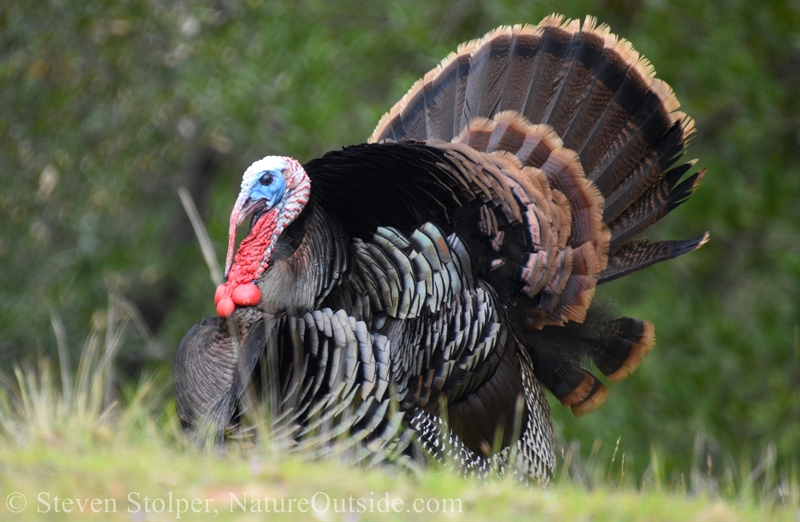
I depart the area under their watchful gaze.
Hike to the Sit Spot
Just before reaching the sit spot, I notice two Yellow-billed magpie (Pica nuttalli). They are foraging on the ground, at the edge of a grassy pasture. This is a rare treat for me. I rarely see them where I live. So I snap a few blurry pictures to capture their identifying markings. This will help me recognize the species the next time I spot them.
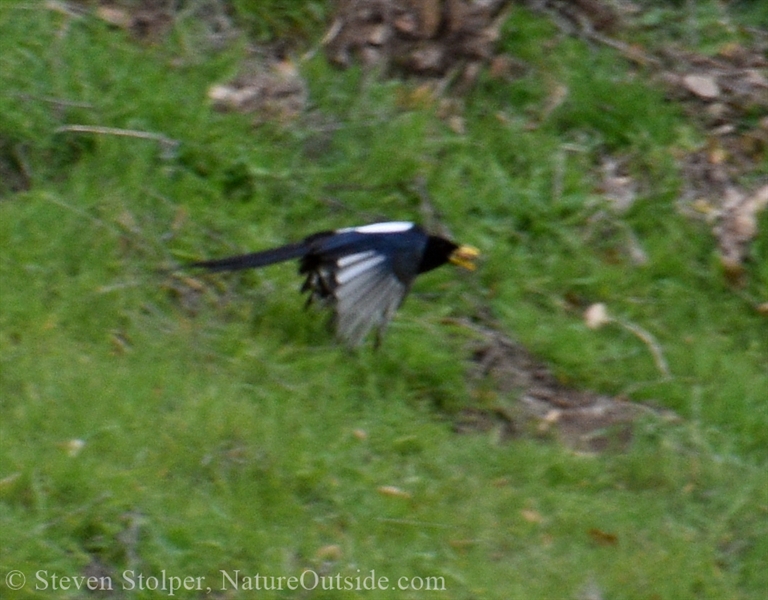
Yellow-billed magpie
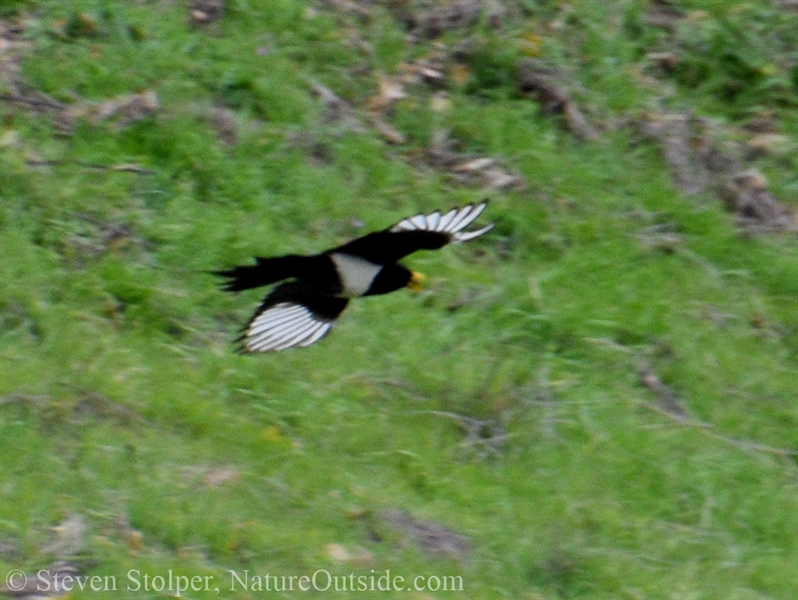
The blurry pictures help me to see their important characteristics.
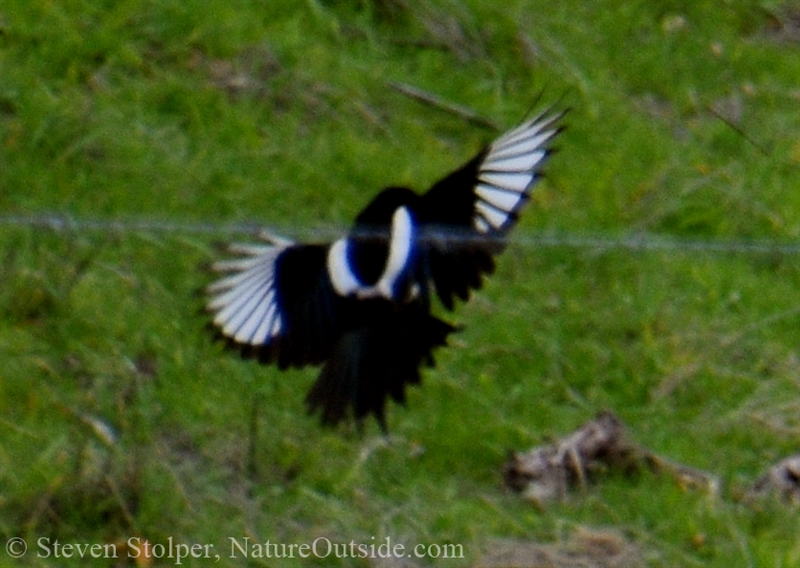
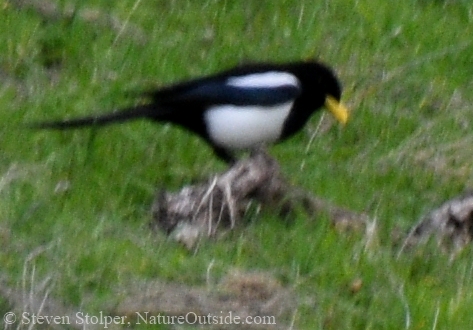
This is how I usually see them (from far away).
The Sit Spot
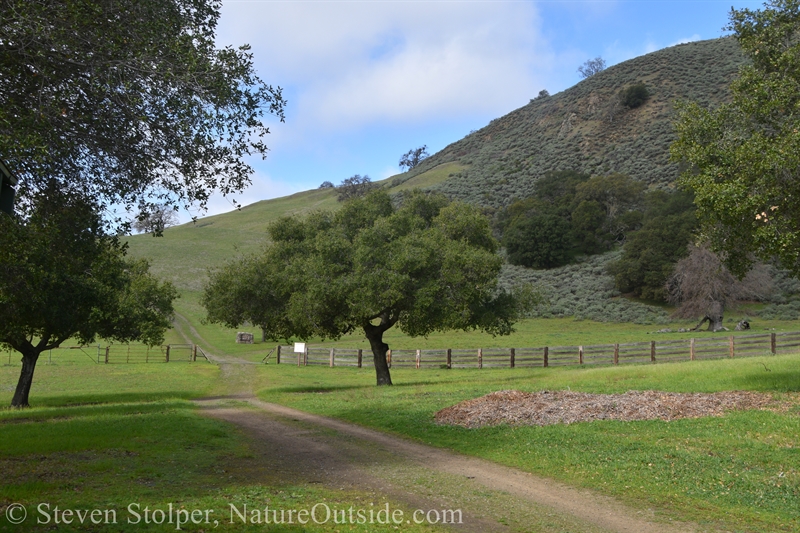
I finally arrive at the sit spot. I am at the abandoned JB Ranch. Founded in 1939, some of its buildings still remain inside the nature preserve. Here is how I describe it in my journal.
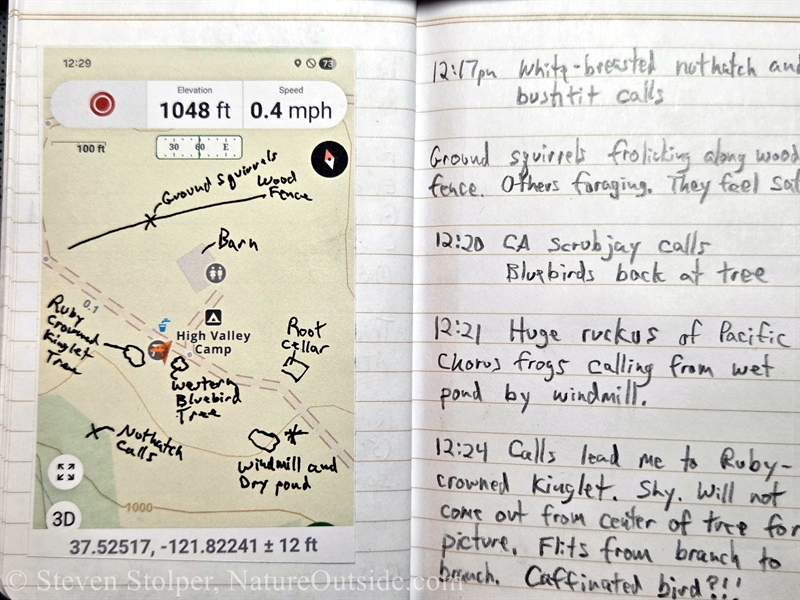
I map out my location and add where I see/hear different plants and animals. I then print out a map (screenshot from my phone), annotate it, and paste it over my hand-drawn effort.
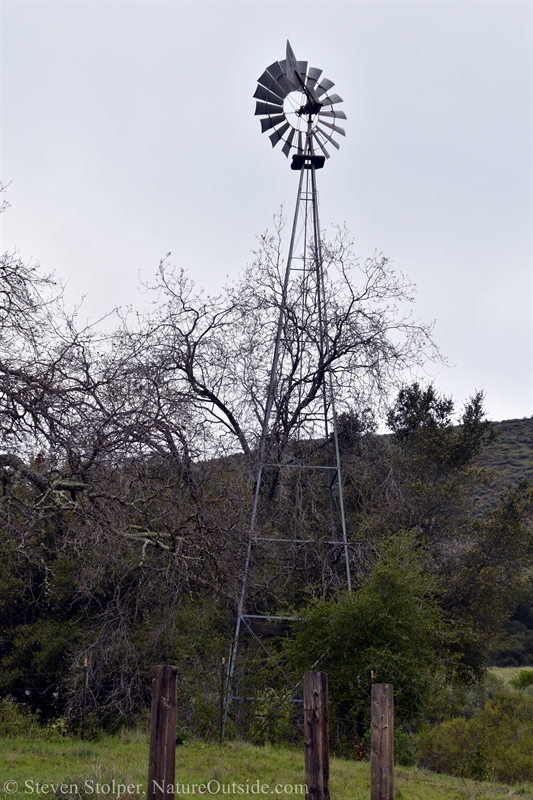
An old windmill adjacent to a small pond.
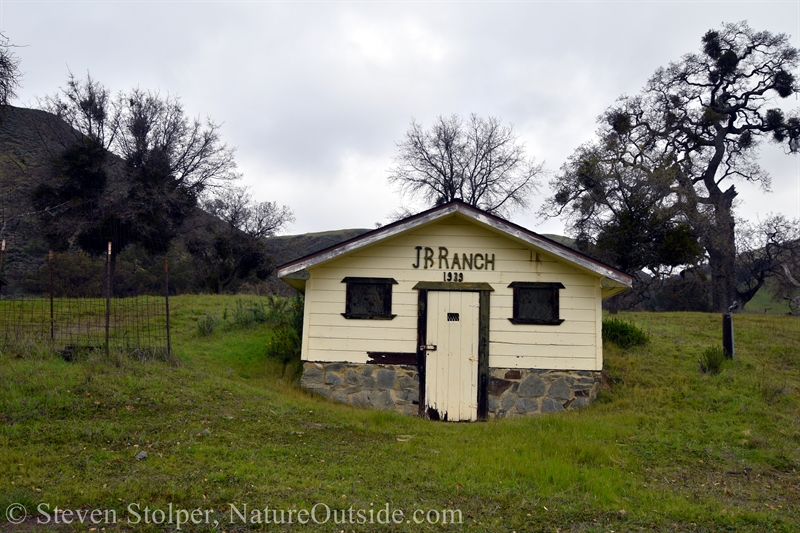
Root cellar
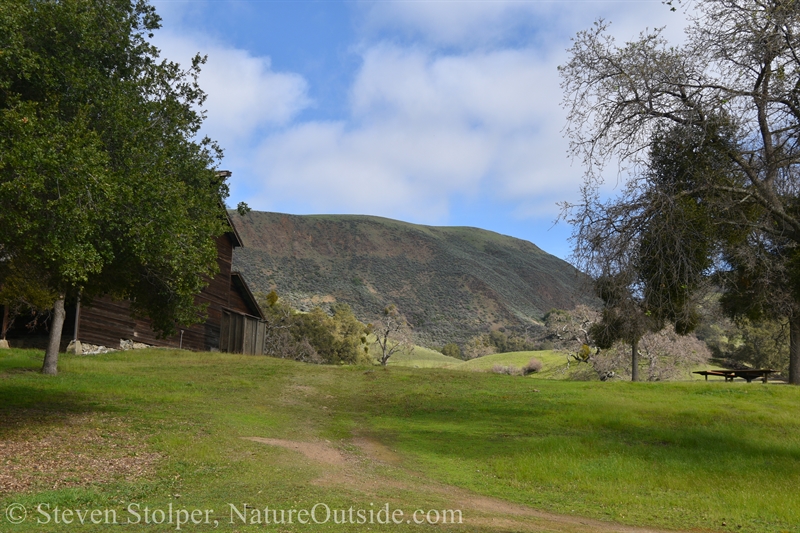
Looking center-right from my sit spot.
Looking left from my sit spot.
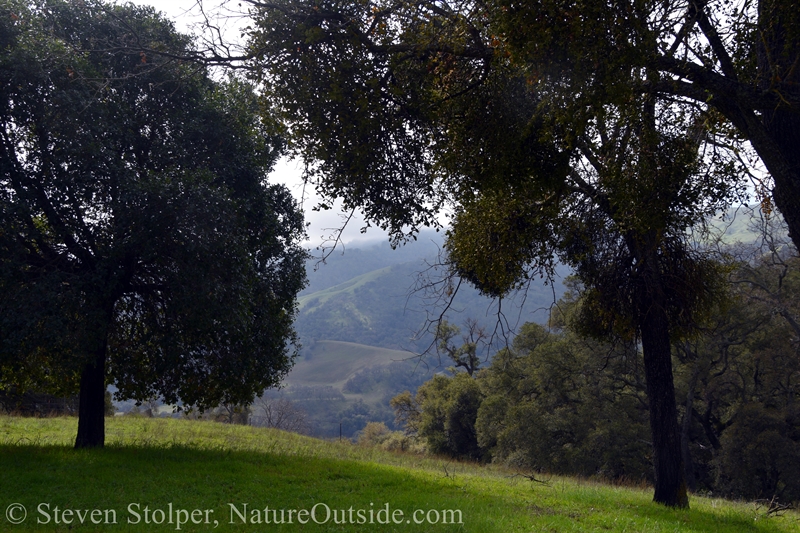
Looking behind me from my sit spot.
I settle in and wait for the animals around me to return to “baseline.” I always try to pick a location where I have cover – I can watch the animals without being noticed. In this case, I sit inconspicuously at a picnic table covered by a large roof. My clothing blends into the shaded area.
I record the animals I see and hear. I try to figure out what they are doing. I look at the plants and notice species, stage of lifecycle, and their general condition. I also note the weather, temperature, and wind direction.
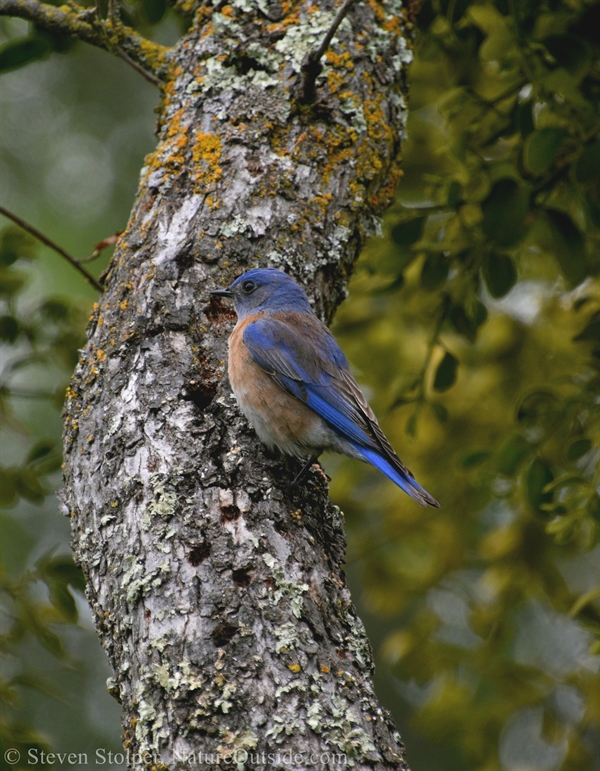
I notice more than ten bird species. Most interesting to me, a pair of Western Bluebirds (Sialia mexicana) keep returning to the same tree. Usually I see bluebirds foraging on the ground. Is this pair building a nest?
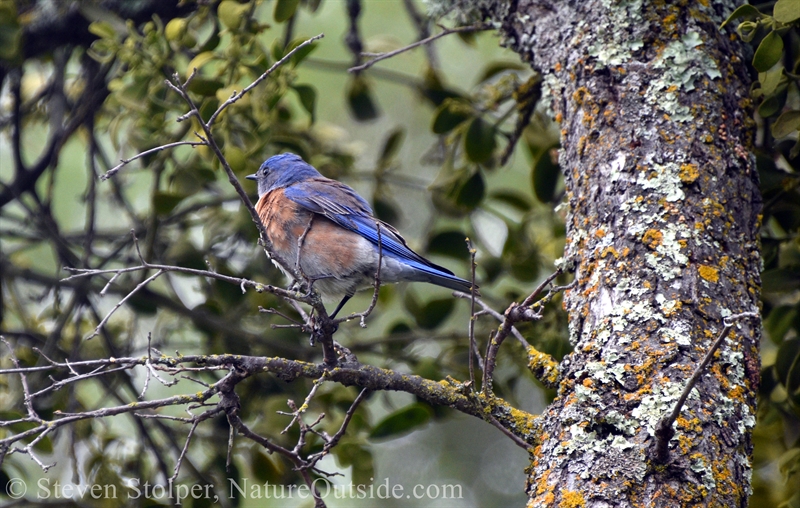
Western bluebirds have beautiful plumage.
A Staccato Surprise
After an hour at the sit spot, I slip on my pack and head home. I descend through grassland and the trail winds through a small copse of trees. As I pass through this small forest, I hear what sounds like gunshots 15 feet above my head.
I’m startled as I simultaneously duck and look up. Then I recognize the pattern of percussions as a woodpecker foraging. But only one woodpecker I’m familiar with can make that loud sound. It is a Pileated woodpecker (Dryocopus pileatus). Never have I been so close to these large birds. It is so big! I watch it dart around the tree above me. And after a few minutes it lets out an earsplitting call and flies off. I watch its oscillating flight as it disappears across a field.
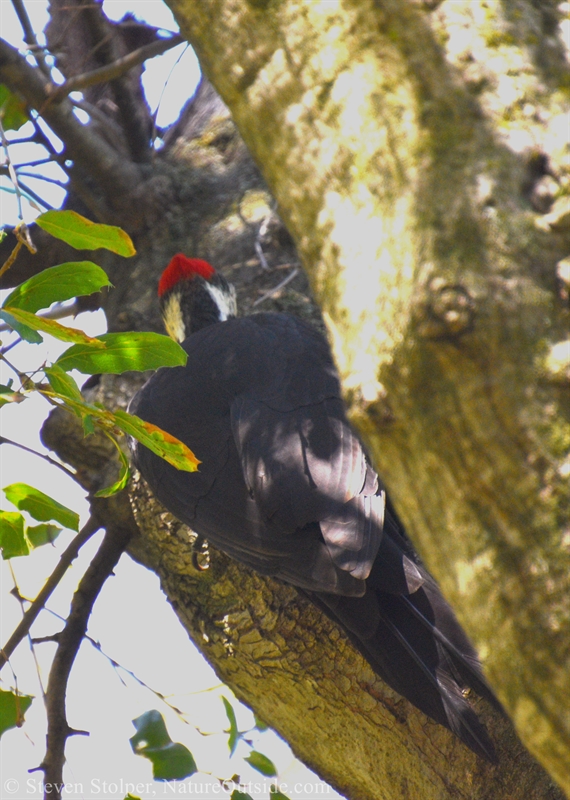
A Pileated woodpecker hunting for food.
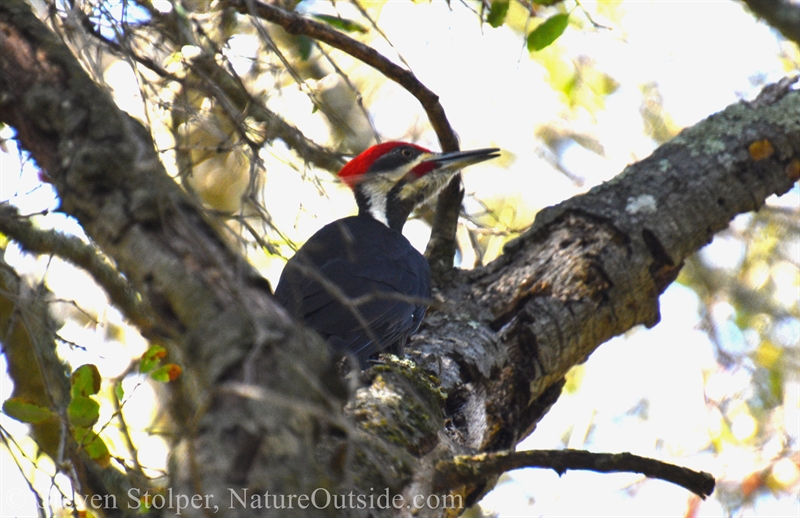
What an amazing bird!
Taking my cue from the woodpecker, I turn and head for home.
Related articles on NatureOutside
5 Reasons Why You Should Keep a Journal (and my secret for how to do it!)
Mysteries on the Beach (Part 1)
For fun facts and useful tips, join the free NatureOutside Newsletter.

The idea of having a sit spot in nature sounds relaxing. Do you think it helps with wedding planning stress?
Yes, I am certain it will help. I always feel rejuvenated after spending time in nature.