
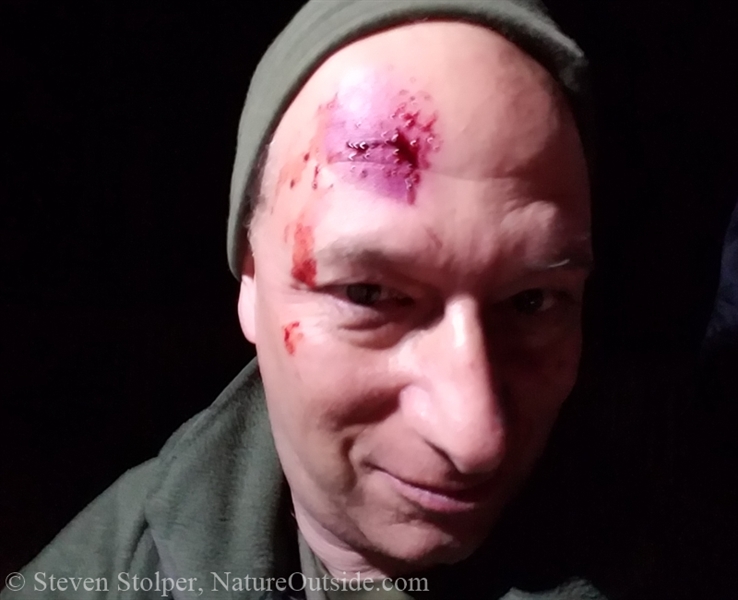
The picture is real. But the wound is not. It is moulage (stage makeup).
As part of my Wilderness First Responder (WFR) training, we did a nighttime scenario. Wilderness accidents don’t just happen during the day. And we need to be able to provide first aid using just the light from our headlamps.
That was two years ago. And it is time to recertify to keep my WFR certificate. First aid skills are perishable – if you don’t use it you lose it. So these mandatory recertifications are a great way to practice the skills.
If you venture into wilderness areas, at least an hour from professional care, you should learn wilderness first aid. The Wilderness First Aid (WFA) certification is 16-hours of training. The more advanced Wilderness First Responder (WFR) training requires 80 hours.
I have spoken in the past about the importance of wilderness first aid and how you have a duty of care to yourself and those you love to learn it. In this article, I want to let you know what you will learn if you decide to take the Wilderness First Responder training. This is based on the Wilderness Medicine Institute at the National Outdoor Leadership School (NOLS). NOLS gives classes throughout the world and I received my training from them.
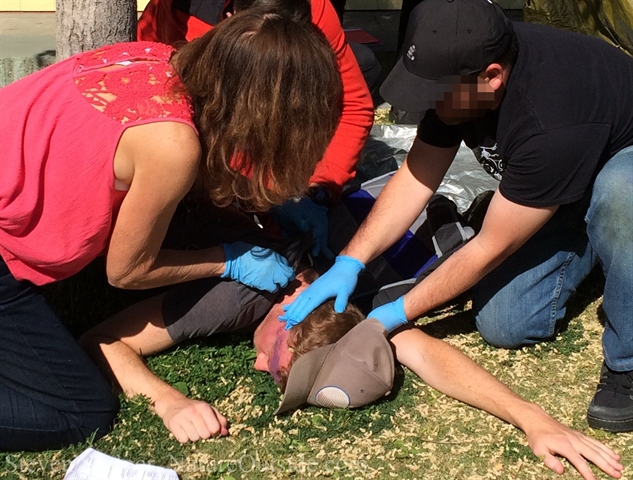
Wilderness first aid allows you to help yourself and others during a wilderness emergency. Photo courtesy of Foster Calm.
Here is what you will learn as a Wilderness First Responder:
- Patient Assessment
- Cardiac and respiratory problems
- CPR
- Diabetes treatment
- Neurological issues
- Abdominal pain
- Urinary and reproductive issues
- Allergies and Anaphylaxis
- Mental health
- Altitude sicknesses
- Heat and hydration
- Cold injuries
- Poisons, stings, and bites
- Lightning
- Drowning/submersion
- Wound management
- Treatment for shock
- Chest injuries
- Head and spine injuries
- Athletic injuries
- Fractures and dislocations
- Psychological first aid
- Legal issues in wilderness first aid
- Leadership and decision making
- Common non-emergency wilderness medical problems
- Infection control and PPE
- Lifting and moving injured people
- Focused spine assessment
You have a duty of care to yourself to own the skills to journey safely in the wilderness. And you have an obligation to return safely to those who love you, depend on you, and await your safe return.
Learn wilderness first aid.
Related Articles on NatureOutside
Wilderness First Aid – Up Your Game!
Wilderness First Aid and the Duty of Care to Yourself
Maxpedition Individual First Aid Pouch
For fun facts and useful tips, join the free NatureOutside Newsletter.


Leave a Comment