
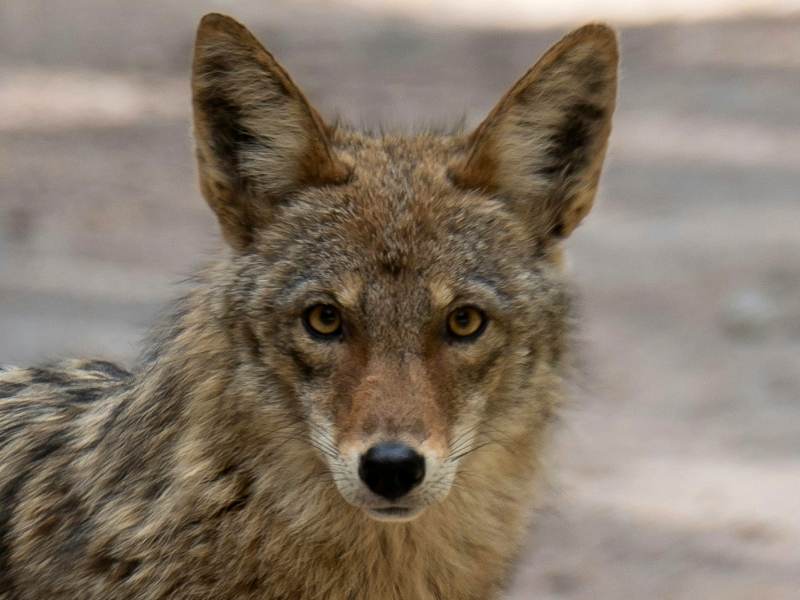
Photo by Matt Richmond on Unsplash
Being alert counts, whether crossing a four-lane avenue or hiking in wilderness. I didn’t set out to learn about coyotes on this dreary November afternoon. But by paying attention and knowing how to look, I learned a lucky lesson about coyote vocalizations.
On the Trail
After several days of office work, I long for an open sky. So a weekday afternoon finds me a sole hiker in the rolling hills of northern California.
California has long had the nickname, “The Golden State.” People assume that the name arises from the gold rush of 1848. But for far longer, the state’s grassy hills have turned a wonderous gold in the dry season. It’s those hills that call to me as I climb an ever ascending trail.
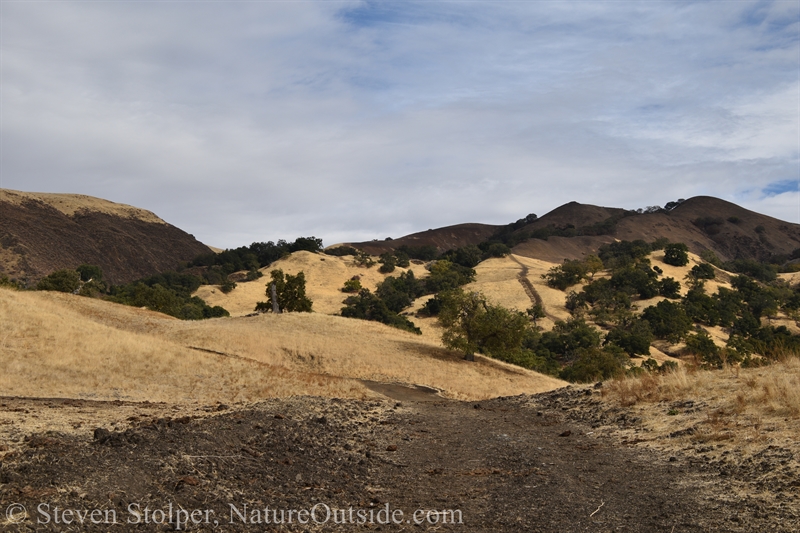
Dried grass turns California’s hills gold before the rains begin. The tops of the hills are scorched by a recent wildfire.
Dog Track
Cows graze here regularly. And I find a large canine track in a cow pie. The track is too large to be anything but a domestic dog. And the blunt, asymmetric claws support my hypothesis. Here’s how to tell the difference between a canine and feline track.
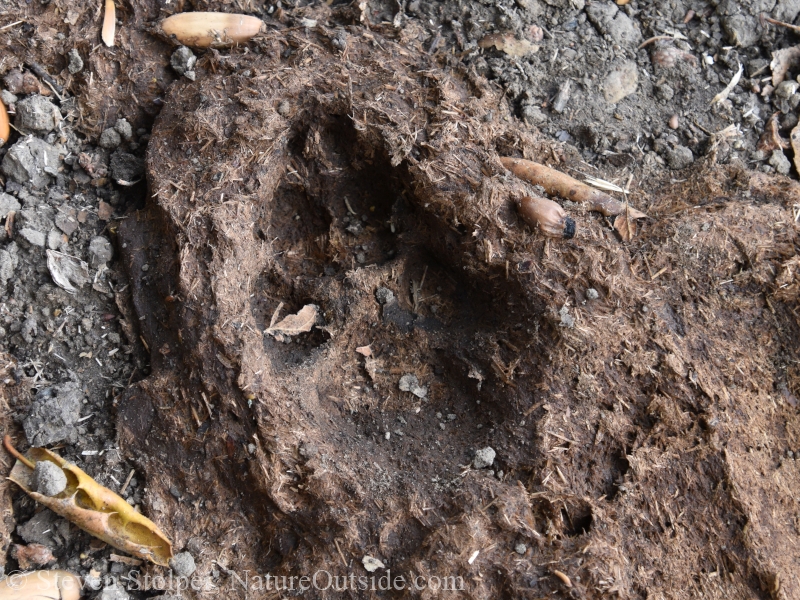
A domestic dog track in a cow pie.
Bluebirds
As I trudge uphill through the grassland, I disturb a pair of foraging Western bluebirds (Sialia mexicana). They’re hunting insects in the grass and alight on a trail sign to better inspect me. A bluebird can spot an insect in the grass from as far as 50 yards. And I feel a pang of jealousy as I reposition my eyeglasses.
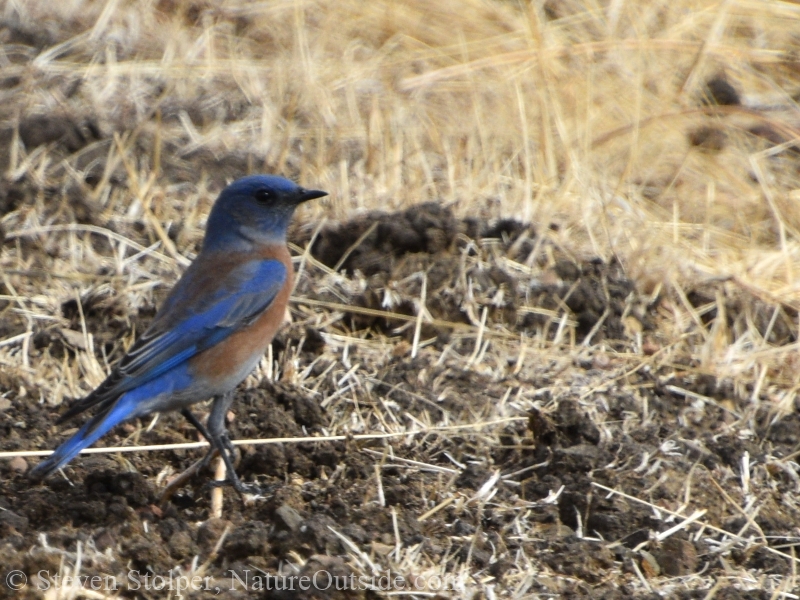
A Western bluebird foraging for insects in the grass.
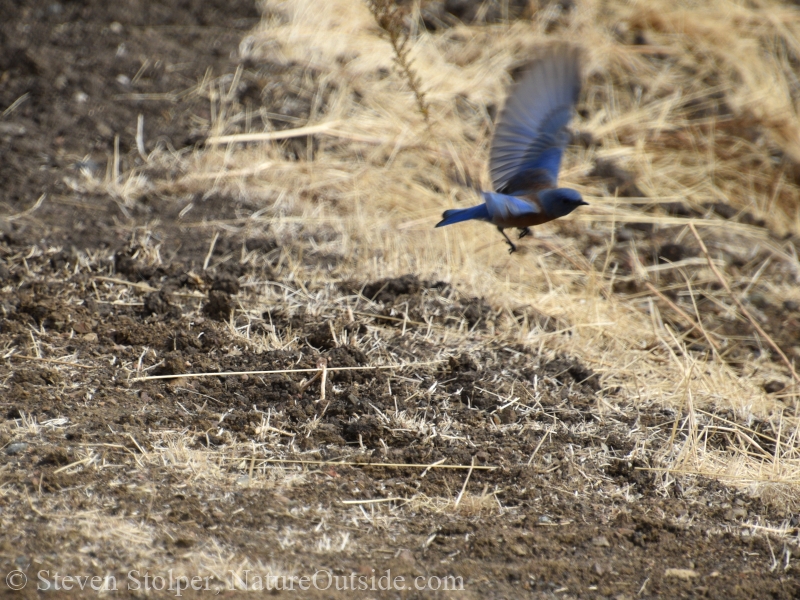
My approach causes it to take to the wing.
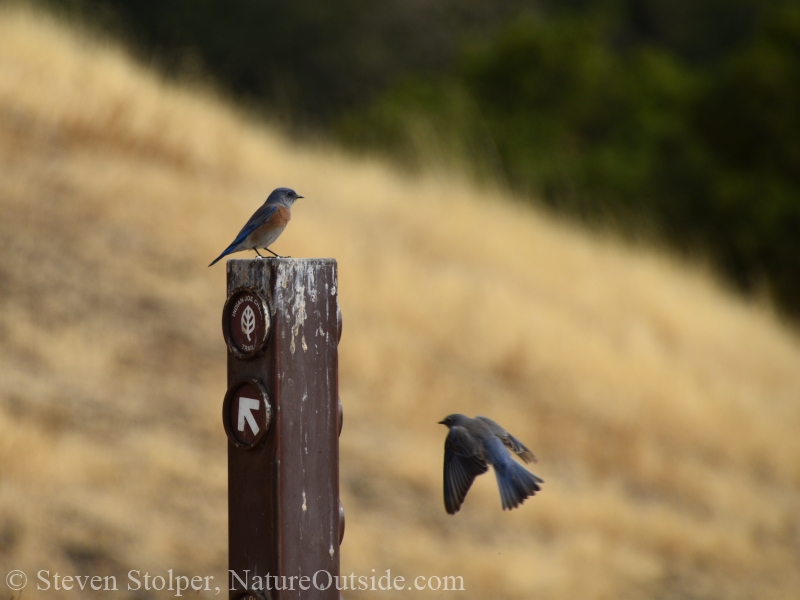
It’s companion joins it to look me over as I pass
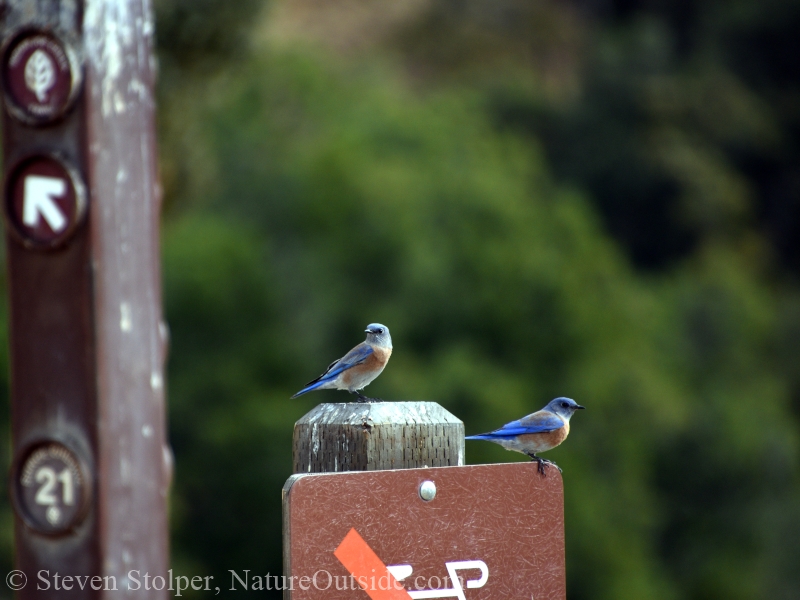
These are truly gorgeous birds.
Bluebirds are cavity nesters. And I see several nest boxes in the distance. As humans deforest the environment, natural tree cavities are becoming scarce. So it’s nice to see the local land management organization trying to help the birds.
Kestrel
The Bluebirds aren’t overly concerned by my presence. But there is another they should be worried about. High overhead I pick out the silhouette of a North American Kestrel. The Kestrel is North America’s smallest falcon and the second smallest falcon in the world. It eats insects, small mammals, and small birds.
The Kestrel hovers over the grassland as it looks for prey. Its wings beating furiously to maintain the hover. Kestrels face into the wind when they hover and beat their wings to stay stationary with respect to the ground. This burns four times as much energy as normal, level flight.
Not seeing prey, it glides a short distance and resumes its stationary vigil, flapping furiously. It’s an amazing display of airmanship.
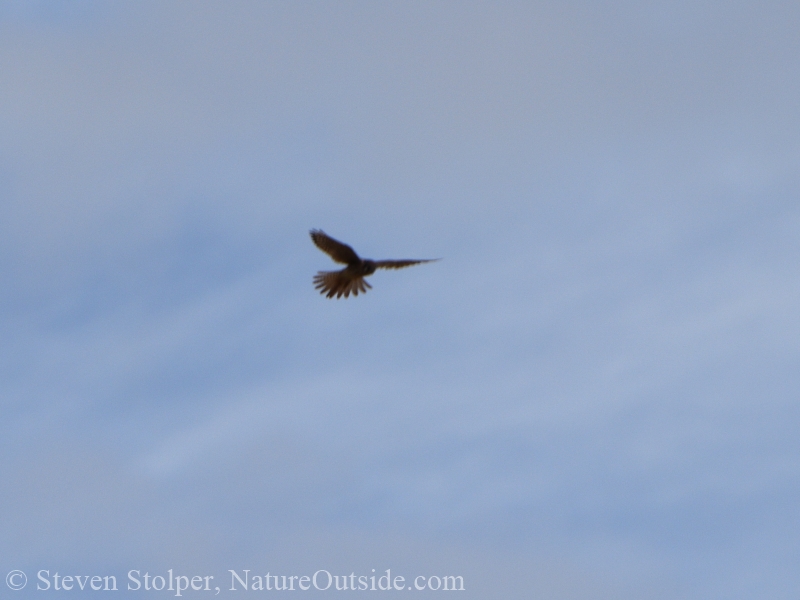
The hovering Kestrel.
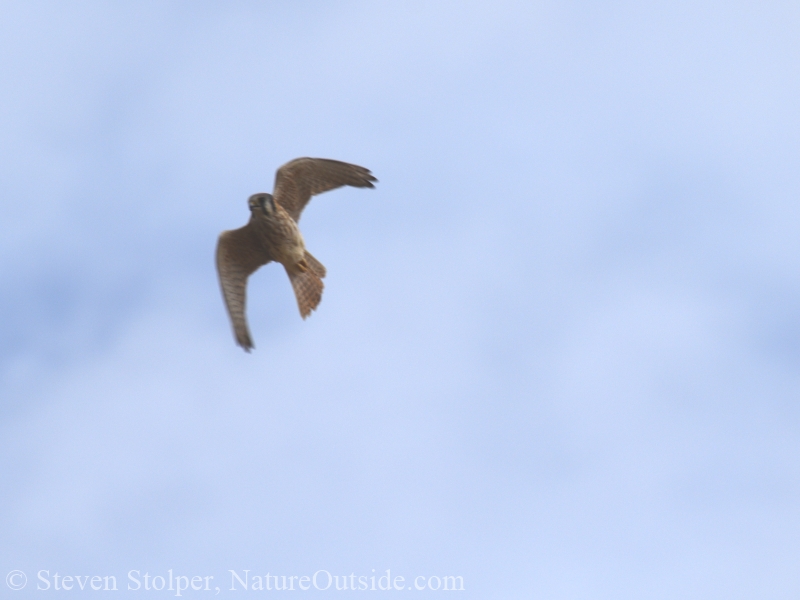
The Kestrel searching the ground below for prey.
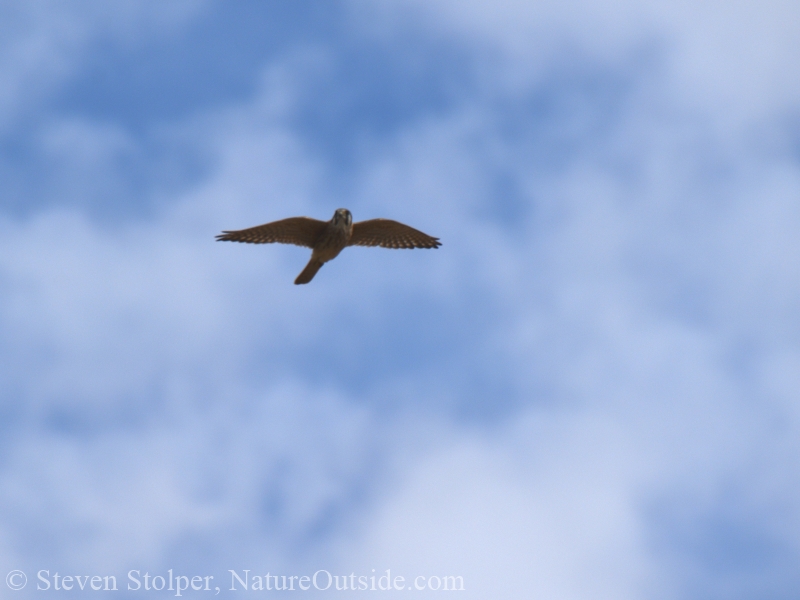
It’s shape is optimized for fast, maneuverable flight.
Coyote Teacher
Animal trackers refer to “coyote teaching” as letting our experience with nature educate us. And today I’m about to learn a lesson.
As I hike, my thoughts drift. I need a break from the daily grind and so far this hike is delivering.
The hours when the mind is absorbed by beauty are the only hours when we truly live.
– Richard Jefferies
I pass an old ranch, founded in 1939, whose abandoned building stand guard over the miles of pastureland.
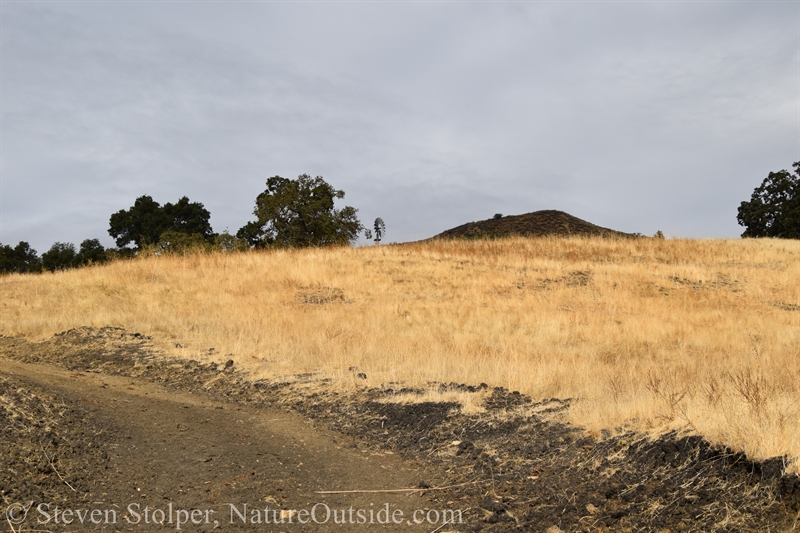
As I climb the trail I see a windmill in the distance
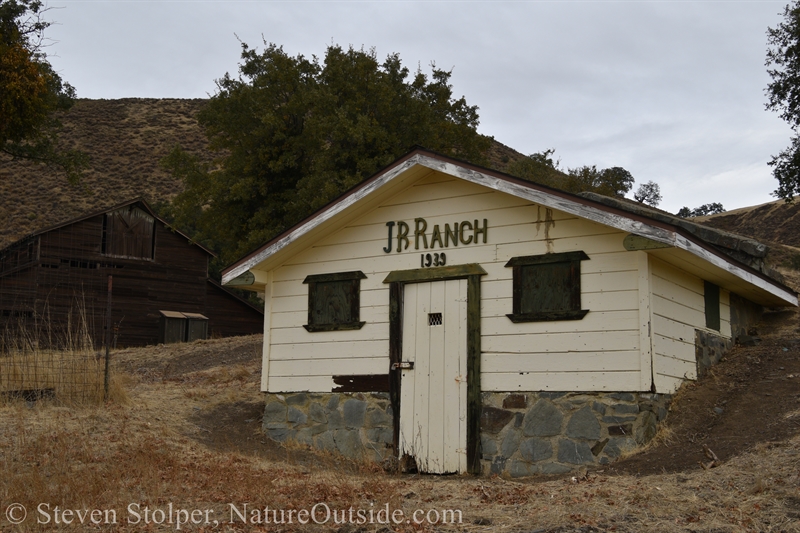
The root cellar reminds us of a time before refrigeration.
Above the ranch, I step over a cattle guard and approach a trail junction. It’s the joining of two old farm roads. I’m traveling uphill so I don’t have a silhouette. My earth-tone clothes blend with the golden-brown hues of the grassland.
Sudden movement catches my eye. Crossing my path is a gorgeous coyote (Canis latrans). Its lean athletic gate and lustrous coat shine with health and wellbeing.
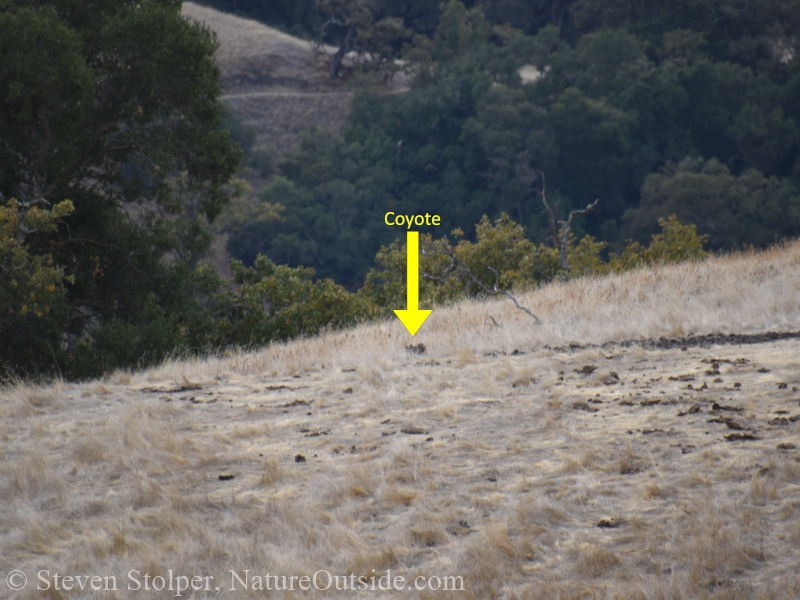
Can you spot the Coyote in this picture? It is moving away from me.
What an opportunity! I reach the junction and pick up its trail. I catch glimpses of the animal as it crests an undulating hill. As silently as I can, I close the distance. I use a fallen snag as cover to approach. Then I return to the dusty road to pick up its trail. I move forward, using the hilly terrain as cover. I hope I can get close enough for a good photograph before I’m discovered.
When it comes to being stealthy, I’m a rank amateur and the Coyote is a professional. It takes the animal about 10 minutes to learn that I’m following it. It detours up a slope and quietly watches me following its trail. It observes me looking at its tracks and then following its path.
I don’t realize the jig is up until I get within 50 yards of the animal. I’m still following its trail and don’t realize it’s up-slope from me until it lets me have it! It’s not quite a bark, not quite a yip, and certainly not a howl. It reminds me of the call of wild dogs in the African night.
I freeze, not sure what to make of the situation. It clearly sees me. But it’s not fleeing. Instead it yips and yips, and yips again. Is it calling to unseen companions? Is it summoning them? Is it warning them of my presence?
I’m shocked that my presence could elicit such a response. It looks to be a young animal, but surely it must experience humans almost daily. I expected to be ignored or grudgingly tolerated. Did catching me trailing it provoke the reaction?
All through the concert, it stops momentarily to look at me. I now realize that the Coyote was signaling discomfort and distress at my presence. Here is a video of a Coyote that has been chased by a dog. The video is from janetkessler on YouTube. The sounds it makes is exactly what I hear from the foot of the slope.
After what feels like ten minutes, the Coyote trots off. It glances behind to see if I follow. I make a big show of not following and set off in a different direction.
I have heard Coyotes howl many times. But it’s the first time I’ve heard this vocalization. I’m lucky to have found a Coyote teacher.
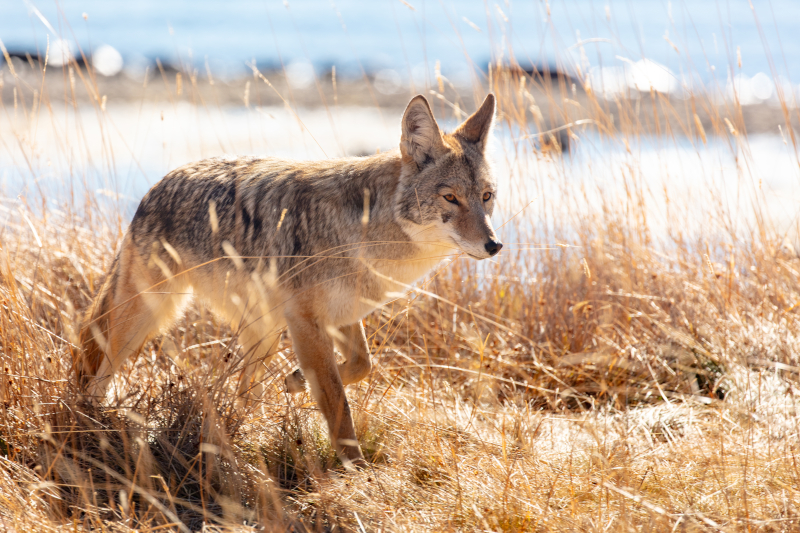
Coyote (Canis latrans) – Photo courtesy of NPS / Jacob W. Frank
Related Articles on NatureOutside
Wolves Teach a Master Class (Part 1)
Fox Tracks in a Salt Marsh – Making Plaster Casts
For fun facts and useful tips, join the free NatureOutside Newsletter.

Leave a Comment